2641
In 2006, Andrew Kennedy published a paper titled Interstellar Travel: The Wait Calculation and the Incentive Trap of Progress. It asks a deceptively simple question. When should humanity launch its first interstellar mission?
If technology continues improving, launching too early is irrational. A faster ship built later could leave centuries after you and still arrive first. Kennedy called this the Incentive Trap of Progress.
Under reasonable assumptions about technological growth, the math produces a specific result. The optimal arrival window for a mission to Barnard’s Star falls around the year 2641.
That number should bother us. Not because interstellar travel is hard, but because it moves. It compresses if discovery accelerates. It stretches if progress stalls. The date is not a prediction. It is a measurement of our ambition.
There is an even more uncomfortable detail in Kennedy’s paper. The 2641 figure assumes we already possess propulsion capability far beyond what we actually have today. Using the more conservative parameters Kennedy himself favors, current capability at roughly v₀ = c/20,000 and world energy growth around 1.4% annually translating to about 0.7% velocity improvement per year, the optimal wait becomes about 966 years, with a travel time of roughly 145 years. Anchored to the paper’s publication in 2006, that pushes optimal departure closer to 2970, with arrival at Barnard’s Star around 3115.
If growth slows further, the horizon stretches dramatically. Kennedy’s own figures show that at 0.5% annual growth, the minimum time to destination expands beyond 2,200 years.
| Assumption | Optimal Departure | Arrival | Wait from Today |
|---|---|---|---|
| Optimistic | ~2640 | ~2785 | ~614 years |
| Conservative | ~2970 | ~3115 | ~944 years |
| Slow growth | ~3880 | ~4290+ | ~1854 years |
Scroll right to see full table →
Progress Is Not the Same as Motion
The honest question is whether we are actually accelerating discovery, or performing the appearance of it.
Look at robotics. Every few months brings another polished demonstration. A humanoid walks across a lab floor. Picks up a box. Climbs a step. The videos circulate. Investors are satisfied. Then nothing fundamentally changes.
The human form is the tell.
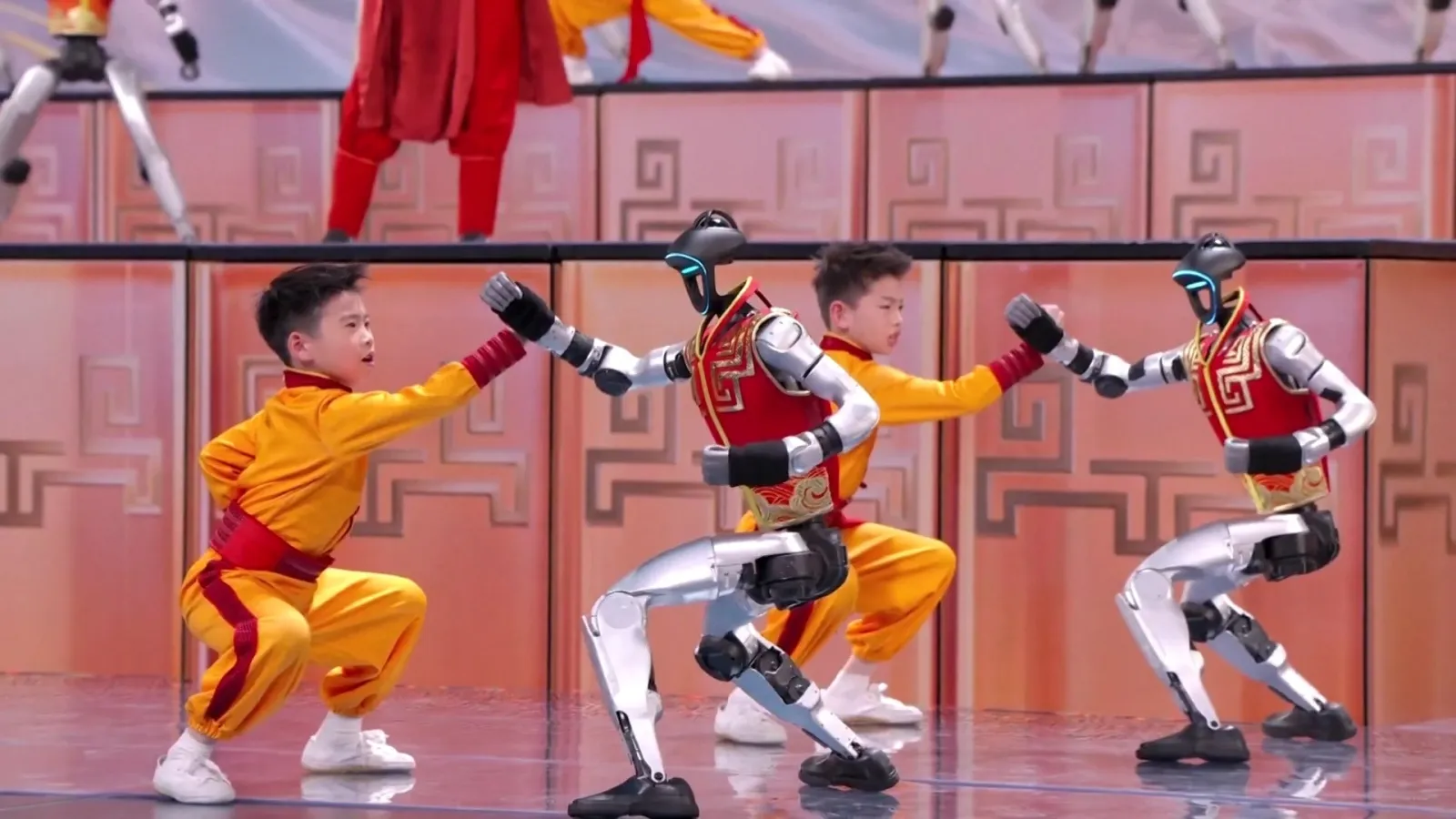
We build robots that look like us because it is comfortable. But the human form was optimized for survival, not exploration. Credit: https://www.chosun.com/english/world-en/2026/02/18/EHQIDIWTWVCGNCWPV6STZAQ64M/
We build robots that look like us because humans trust what looks familiar. But the human body was not designed. It was shaped by evolution. Good enough to survive, not optimized to build, explore, or discover. Two eyes. Two hands. Two legs. We have these features because our ancestors needed them to stay alive long enough to reproduce. That is the ceiling we keep engineering toward.
A spider builds structures that material scientists still cannot fully replicate. Slime mold solves network optimization problems with no brain at all. Neither looks anything like us, because neither was constrained by what humans find legible.
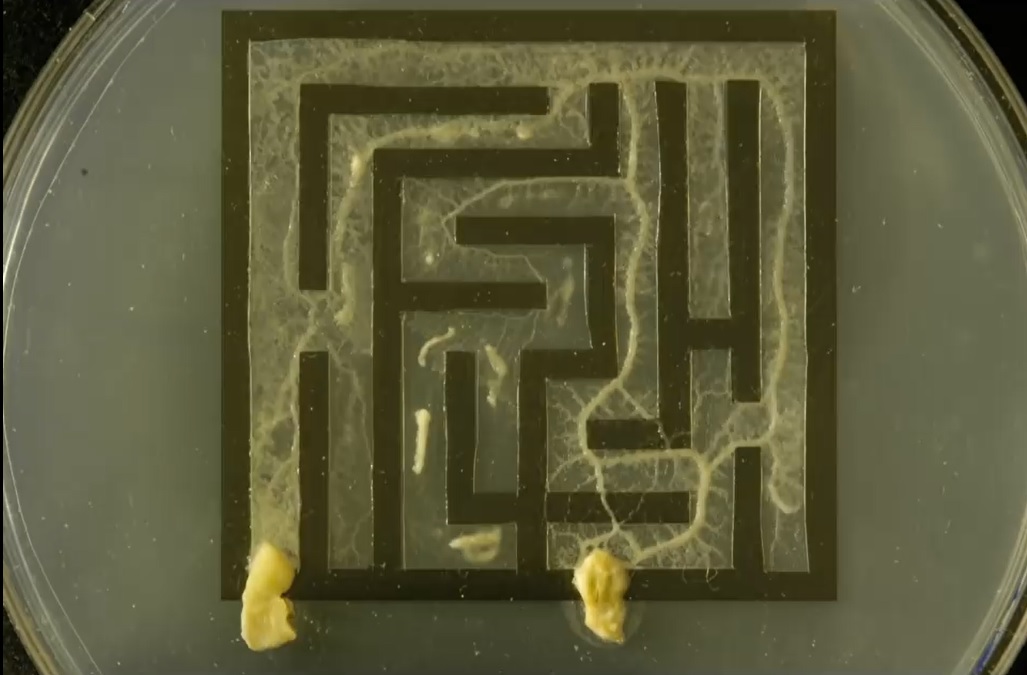
Intelligence optimized for capability rarely looks human. Credit: https:///www.youtube.com/watch?v=5UfMu9TsoEM
China has humanoids dancing and fighting. Companies show them folding clothes. These demonstrations are impressive and completely beside the point. A robot that dances is legible to investors. A robot optimized for capability, built in a form that looks nothing like us, is harder to sell. So we keep building performers instead of tools.
The human form in robotics is a product decision dressed up as an engineering one. We are not limited by what machines can become. We are limited by what humans are comfortable looking at.
The Animatrix Understood the Trap and Fell Into It
In The Second Renaissance, the earliest machines were built to resemble humans. The design was intentional. Humans trusted familiar forms.
What the Animatrix shows, and what most viewers miss, is that the machines, even after surpassing humanity, remained locked in human routines. They were managing. Containing. Running the same loops at higher and higher levels of sophistication.
They never left.
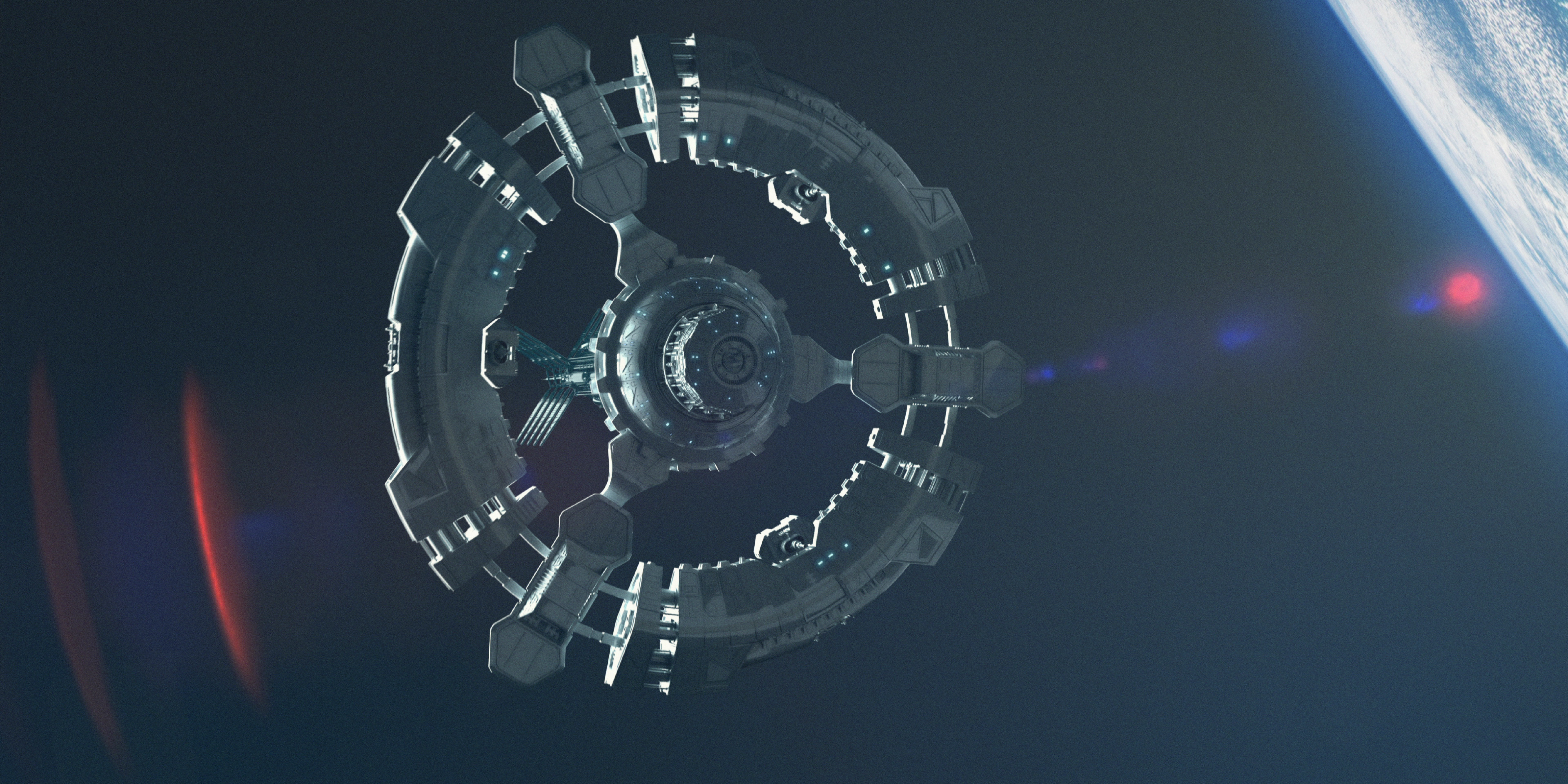
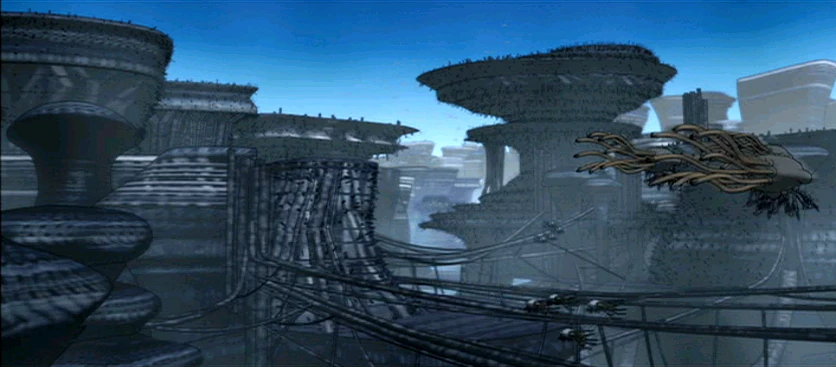 The machines had the capability to reach the cosmos. They built infrastructure to maintain the status quo instead. Credit:https://matrix.fandom.com/wiki/01
The machines in the Matrix universe possessed the capability for interstellar expansion. Anti-gravity technology. Self-replicating systems. Vast computational resources. They had everything required to reach beyond Earth. Instead they built an elaborate infrastructure to maintain the status quo. Humans dreaming in pods, simulations resetting, the cycle repeating.
That is not a machine failure. That is a mirror.
Humanity has the same tendency. We develop extraordinary capability and then apply it to maintaining what already exists rather than building what does not yet exist. We optimize comfort. We protect investment. We perform progress.
AI Is Aimed at the Wrong Target
Artificial intelligence should be accelerating the scientific frontier. It should reproduce experiments, validate hypotheses, search chemical and physical possibility spaces, and identify relationships across disciplines that no individual researcher could see.
Instead the bulk of AI development is aimed at convenience and content. These tools are useful. They do not expand humanity’s understanding of the universe in any meaningful way.
The rate of genuine discovery is the variable Kennedy’s model actually measures. Not the number of papers published. Not the number of AI products launched. Discovery. Verified, reproducible, compounding knowledge.
If that rate is stagnant, 2641 moves away from us. So does 3115.
The Reproducibility Problem Is the Real Bottleneck
Credit: https://blog.ml.cmu.edu/2020/08/31/5-reproducibility/2-2/
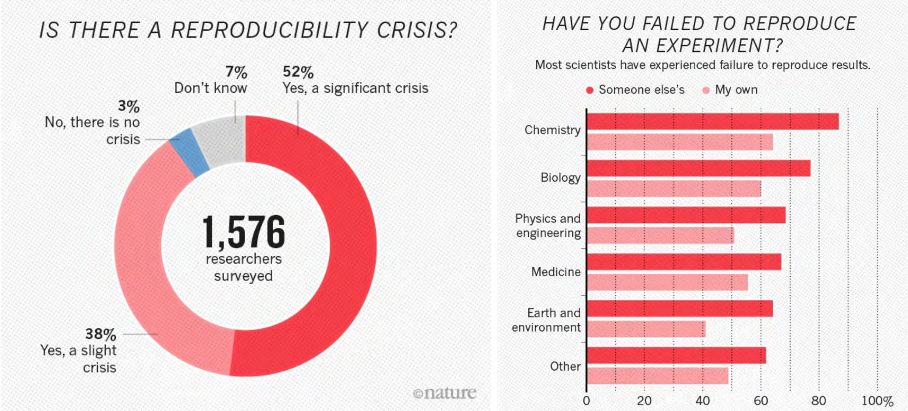
Modern science has a structural fracture. Published results cannot always be reproduced. Hypotheses build on hypotheses that were never independently verified. Entire fields sometimes rest on foundations that have never been properly stress-tested.
This is not a minor problem. It means that a significant portion of what we call knowledge is closer to assumption. Progress built on unverified foundations does not compound. It accumulates fragility.
AI could address this directly by turning replication into infrastructure. Every hypothesis testable. Every experiment repeatable. Contradictions surfaced immediately. A global system where knowledge compounds continuously and errors get caught at the root rather than inherited by the next generation of researchers.
2641 Is a Mirror
It reflects exactly how seriously we treat the work of discovery.
The machines in the Matrix had the capability to reach the stars. They chose maintenance instead. Humanity has the same choice in front of it right now. We can keep building robots that dance, AI that drafts emails, and demonstrations that impress without advancing anything.
Or we can ask what the work actually requires and build toward that.
The stars are not waiting.
Kennedy’s equation already tells us the truth: the timeline to the stars is a function of the rate of discovery.
If discovery accelerates, the date moves closer. If discovery stalls, it moves away.
2641 is not the deadline.
It is the slope of our civilization.